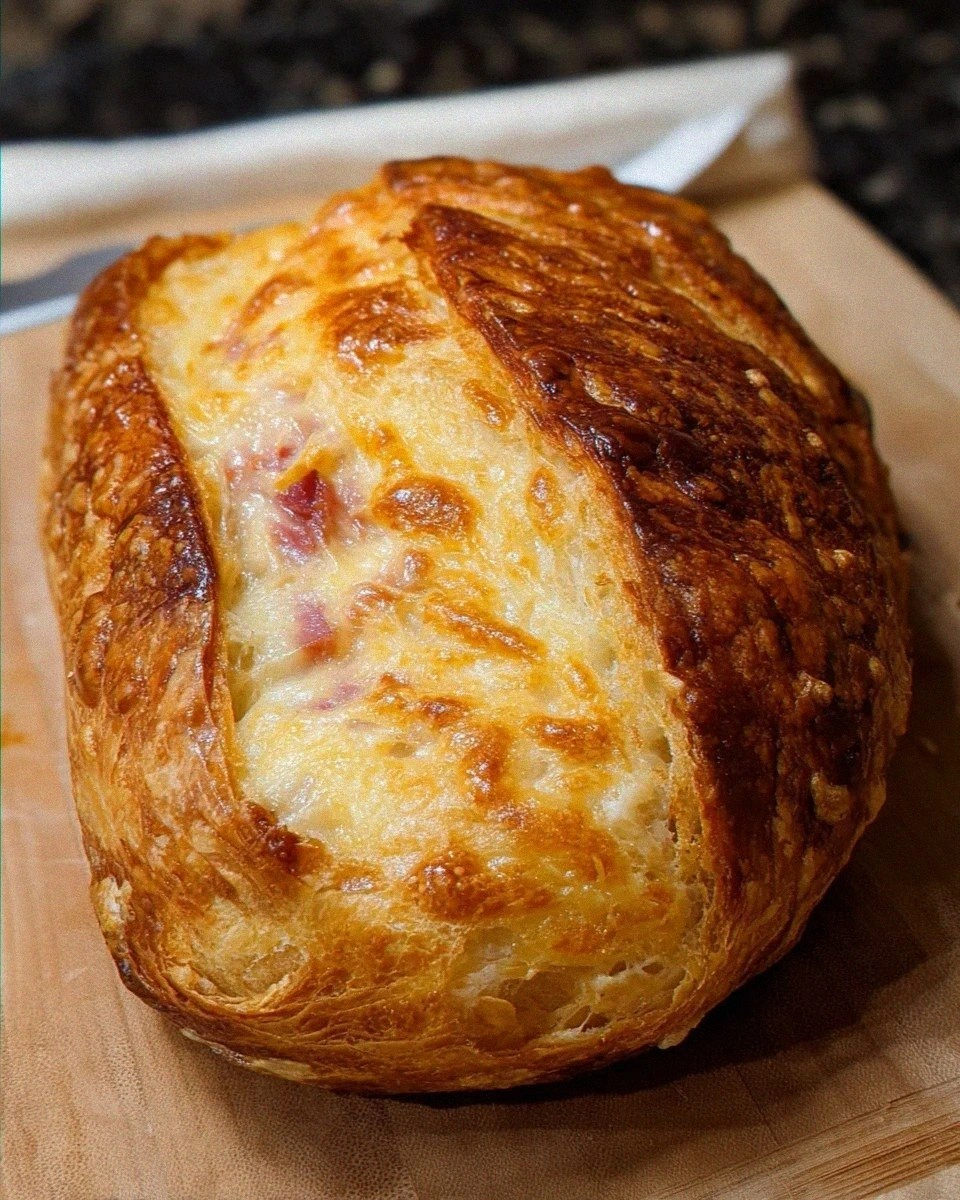
Ham and Cheese Sourdough Croissant Loaf
 Save
Save
It was a crisp Saturday morning in early autumn, the kind of day when the kitchen feels like the heart of the house. I remember pulling the heavy, cast‑iron skillet from the cupboard, the scent of fresh coffee already dancing in the air, and the thought of something buttery, flaky, and a little bit indulgent tugging at my mind. The moment I sliced open a loaf of sourdough the night before, a cloud of fragrant steam rose like a gentle sigh, carrying hints of tangy wheat and a whisper of earth. That steam seemed to promise a transformation, and I knew exactly what I wanted: a croissant‑style loaf that married the rustic charm of sourdough with the luxurious layers of a classic butter croissant, all studded with melty Gruyère and savory ham.
I set to work with a grin, because the idea of combining the tang of a mature starter with the rich, buttery lamination of a croissant felt like a culinary love story waiting to happen. As the dough rested, I could already hear the faint crackle of butter sheets folding over each other, and the kitchen began to fill with the subtle scent of dairy and wheat. When the final loaf emerged from the oven, its golden‑brown crust crackled under the knife, revealing a buttery, flaky interior that gave way to pockets of gooey cheese and tender ham. The first bite was a revelation—crisp, airy, tangy, and decadently cheesy all at once. It was the kind of comfort that makes you pause, smile, and think, “I could do this every day.”
What makes this Ham and Cheese Sourdough Croissant Loaf truly special isn’t just the flavor; it’s the technique that brings together two bread‑making worlds that rarely meet. The sourdough starter provides a deep, slightly sour backbone that cuts through the richness of the butter, while the lamination creates that coveted croissant‑like flakiness. The ham and Gruyère add a savory depth that turns a simple loaf into a hearty breakfast, a brunch centerpiece, or even a snack that can stand up to a glass of cold cider. And the best part? You don’t need a professional kitchen or a pastry chef’s degree—just a little patience, a good starter, and the willingness to experiment.
But wait—there’s a secret trick in step four that will give you an extra‑crispy crust without sacrificing that tender crumb. Trust me, once you try it, you’ll wonder how you ever baked without it. Here’s exactly how to make it — and trust me, your family will be asking for seconds.
🌟 Why This Recipe Works
- Flavor Depth: The sourdough starter introduces a subtle tang that balances the richness of butter and cheese, creating a harmonious flavor profile that feels both sophisticated and comforting.
- Layered Texture: By laminating butter into the dough, you achieve that iconic flaky, airy crumb reminiscent of a classic croissant, while the sourdough base keeps the interior moist and tender.
- Ease of Scaling: The recipe can be doubled for larger gatherings or halved for a cozy weekend treat, making it adaptable to any number of diners.
- Time Efficiency: Although it involves a few resting periods, the hands‑on time is relatively short, allowing you to multitask while the dough ferments.
- Versatility: Swap the ham for smoked turkey, or replace Gruyère with sharp cheddar, and you have a whole new flavor adventure without rewriting the whole recipe.
- Nutrition Boost: The sourdough starter adds probiotic benefits, while the protein from ham and cheese makes this loaf a satisfying, balanced option for breakfast or brunch.
- Crowd‑Pleaser Factor: The visual appeal of a golden, layered loaf topped with a glossy cheese crust instantly draws attention, and the aroma alone convinces even the most skeptical eaters to dig in.
🥗 Ingredients Breakdown
The Foundation
Sourdough Starter is the beating heart of this loaf. A ripe, bubbly starter gives your dough that signature tang and helps develop a strong gluten network, which is essential for both the rise and the flaky layers. If you’re new to sourdough, a store‑bought starter works just fine, but a home‑grown one will add a personal touch that you can’t replicate otherwise. Choose a starter that’s been fed within the last 12 hours for maximum activity.
All‑Purpose or Bread Flour forms the structural backbone. Bread flour, with its higher protein content, yields a chewier, more elastic dough that can hold the butter layers without tearing. If you prefer a softer crumb, you can blend half all‑purpose and half bread flour, but keep the total flour weight consistent to maintain hydration levels.
Water is the magic elixir that hydrates the flour, allowing gluten to develop. Using filtered or spring water helps avoid any chlorine or mineral imbalances that could inhibit fermentation. Aim for a lukewarm temperature (around 78°F/25°C) to give the starter a gentle boost without shocking it.
The Levain Boost
Levain is essentially a small, intensified version of your starter, made by mixing a portion of starter with fresh flour and water. This step adds complexity and depth to the flavor, giving the loaf a nuanced sour note that pairs beautifully with the savory fillings. I like to feed my levain the night before baking, letting it reach peak activity by morning.
Salt not only enhances the overall flavor but also regulates yeast activity, preventing over‑proofing. A good rule of thumb is 2% of the total flour weight. Too much salt can tighten the gluten and make the dough tough, while too little can result in a flat, bland loaf.
The Secret Weapons
Unsalted Butter is the star of the lamination process. Its high fat content creates those delicate, flaky layers that melt in your mouth. Keep the butter chilled but pliable—about the same consistency as the dough—so it can be rolled into the dough without breaking. If you’re feeling adventurous, try a mix of butter and a splash of olive oil for a slightly nutty undertone.
Gruyère Cheese brings a nutty, buttery richness that melts beautifully into the dough, creating pockets of gooey delight. Its natural sweetness balances the sourness of the starter, and its firm texture holds up during baking, preventing a soggy center. If you can’t find Gruyère, aged cheddar or Emmental work as excellent substitutes.
Diced Ham provides the savory punch that turns this loaf from a simple bread into a hearty, protein‑packed treat. Choose a high‑quality, minimally processed ham—think smoked country ham or a thick‑cut deli style. The small cubes ensure even distribution, so every bite gets a burst of salty goodness.
Finishing Touches
A light dusting of flour on the work surface prevents sticking while you roll out the dough for lamination. I recommend using a silicone mat; it provides just the right amount of friction without tearing the delicate butter layers. Finally, a quick egg wash (one egg beaten with a tablespoon of water) applied before baking gives the loaf a glossy, golden finish that looks as good as it tastes.
With your ingredients prepped and ready, let's get cooking. Here's where the fun really begins...
🍳 Step-by-Step Instructions
🔐 Expert Tips for Perfect Results
The Taste Test Trick
Before you bake the final loaf, pull a tiny piece of dough from the center and pop it into a hot pan for a quick “taste test.” This miniature bake reveals whether the salt balance is right and if the butter layers are properly incorporated. If the sample is too bland, add a pinch more salt to the main dough; if the butter seems soggy, chill the dough a bit longer before the next fold.
Why Resting Time Matters More Than You Think
Resting isn’t just about convenience—it’s a crucial step for gluten relaxation and butter solidification. Skipping the 15‑minute chill between folds often results in a dough that tears, ruining the lamination. I once tried to rush this step and ended up with a dense, uneven crumb that felt more like a flatbread than a croissant loaf. Patience here pays off in every flaky bite.
The Seasoning Secret Pros Won’t Tell You
A pinch of smoked paprika sprinkled over the ham before folding adds a subtle, smoky undertone that elevates the whole loaf. It’s a tiny addition, but it creates a depth of flavor that makes the ham taste less “processed” and more “artisan.” I discovered this trick while watching a French baker on YouTube, and it’s become my go‑to for any savory pastry.
Handling the Levain Like a Pro
When your levain is at its peak, it will be very bubbly and may even overflow its container. Transfer it to a larger bowl if needed, and gently fold it over itself a couple of times to redistribute the bubbles. This ensures an even fermentation throughout the dough, preventing any “pockets” of over‑sour flavor.
Cooling the Loaf the Right Way
Never slice a hot loaf. Letting the bread rest on a wire rack allows steam to escape, preserving that crisp crust. If you slice too early, the interior will be gummy and the cheese may ooze out, creating a mess on your cutting board. Trust the 20‑minute cooling rule, and you’ll be rewarded with clean, beautiful slices.
Storing for Maximum Freshness
Wrap the cooled loaf in a clean kitchen towel, then place it in a paper bag inside a sealed plastic bag. This combination keeps the crust from drying out while allowing the crumb to stay moist. If you’re planning to enjoy it over several days, slice it first and store the slices individually—this prevents the loaf from becoming a soggy brick.
🌈 Delicious Variations to Try
One of my favorite things about this recipe is how versatile it is. Here are some twists I've tried and loved:
Mediterranean Sunrise
Swap the ham for sun‑dried tomatoes and the Gruyère for feta cheese. Add a handful of fresh oregano leaves before folding. The result is a bright, tangy loaf with a Mediterranean flair, perfect for brunch alongside a glass of chilled rosé.
Spicy Jalapeño Cheddar
Replace the Gruyère with sharp cheddar and fold in finely diced jalapeños with the ham. The heat from the peppers cuts through the buttery layers, creating a lively bite that’s great for game‑day gatherings.
Sweet & Savory Apple‑Bacon
Dice crisp apple pieces and substitute the ham with cooked, crumbled bacon. Use a mild cheese like mozzarella to let the apple’s sweetness shine. This version feels like a breakfast casserole in loaf form—a real crowd‑pleaser for lazy Sunday mornings.
Herb‑Infused Vegan
Omit the ham and cheese, and instead fold in a mixture of sautéed mushrooms, spinach, and vegan mozzarella. Use a plant‑based butter for lamination. The earthy flavors and melty vegan cheese create a satisfying, animal‑free alternative that still delivers that coveted flaky texture.
Maple‑Glazed Breakfast
Brush the finished loaf with a thin layer of maple syrup mixed with a dash of melted butter just before the final 5 minutes of baking. The glaze caramelizes, giving the crust a sweet, glossy finish that pairs beautifully with the salty ham.
📦 Storage & Reheating Tips
Refrigerator Storage
Wrap the completely cooled loaf in a clean kitchen towel, then place it in an airtight container or a zip‑top bag. Stored this way, it stays fresh for up to 4 days. The towel helps maintain the crust’s crunch while the bag prevents the crumb from drying out.
Freezing Instructions
Slice the loaf before freezing—this makes reheating quicker and more even. Lay the slices on a parchment sheet, flash freeze for 30 minutes, then transfer them to a freezer‑safe bag. The loaf can be kept for up to 2 months without significant loss of flavor or texture.
Reheating Methods
To revive a frozen slice, preheat your oven to 350°F (175°C), place the slice on a baking sheet, and bake for 8‑10 minutes. For a softer crust, cover the slice loosely with foil for the first half of the reheating time. The trick to reheating without drying it out? A splash of water tossed onto the tray before popping it in the oven creates a gentle steam that revives the crumb.
❓ Frequently Asked Questions
Can I use a commercial yeast instead of sourdough starter?
Do I have to use Gruyère, or can I swap it for another cheese?
How do I know when the dough is properly laminated?
Can I make this loaf gluten‑free?
What’s the best way to freeze the leftover loaf?
Should I proof the loaf in a warm or cool environment?
Can I add herbs or spices to the dough?
Why does my crust turn too dark before the inside is fully baked?
Recipe Card








Other Reader Favorites
 Desserts
Buzzy Raspberry Cheesecake Bombs Recipe
Delicious Buzzy Raspberry Cheesecake Bombs Recipe
 Dinner
Zesty Lemon Garlic Roasted Salmon: A Flavorful Journey to Health and Simplicity
Delicious Zesty Lemon Garlic Roasted Salmon: A Flavorful Journey to Health and Simplicity
 Desserts
Heavenly Chewy Chocolate Crinkle Cookies: A Delightful Chocolate Treat
Delicious Heavenly Chewy Chocolate Crinkle Cookies: A Delightful Chocolate Treat
 Appetizers
Crispy Pita Parmesan Chips: The Ultimate Snack Experience
Delicious Crispy Pita Parmesan Chips: The Ultimate Snack Experience